
AI is changing how businesses run their marketing campaigns. It takes over repetitive tasks like scheduling posts, sending emails, and tracking performance, so teams can focus on strategy and creativity. By using AI to automate marketing, businesses can save time, improve targeting, and increase campaign results without adding extra workload.
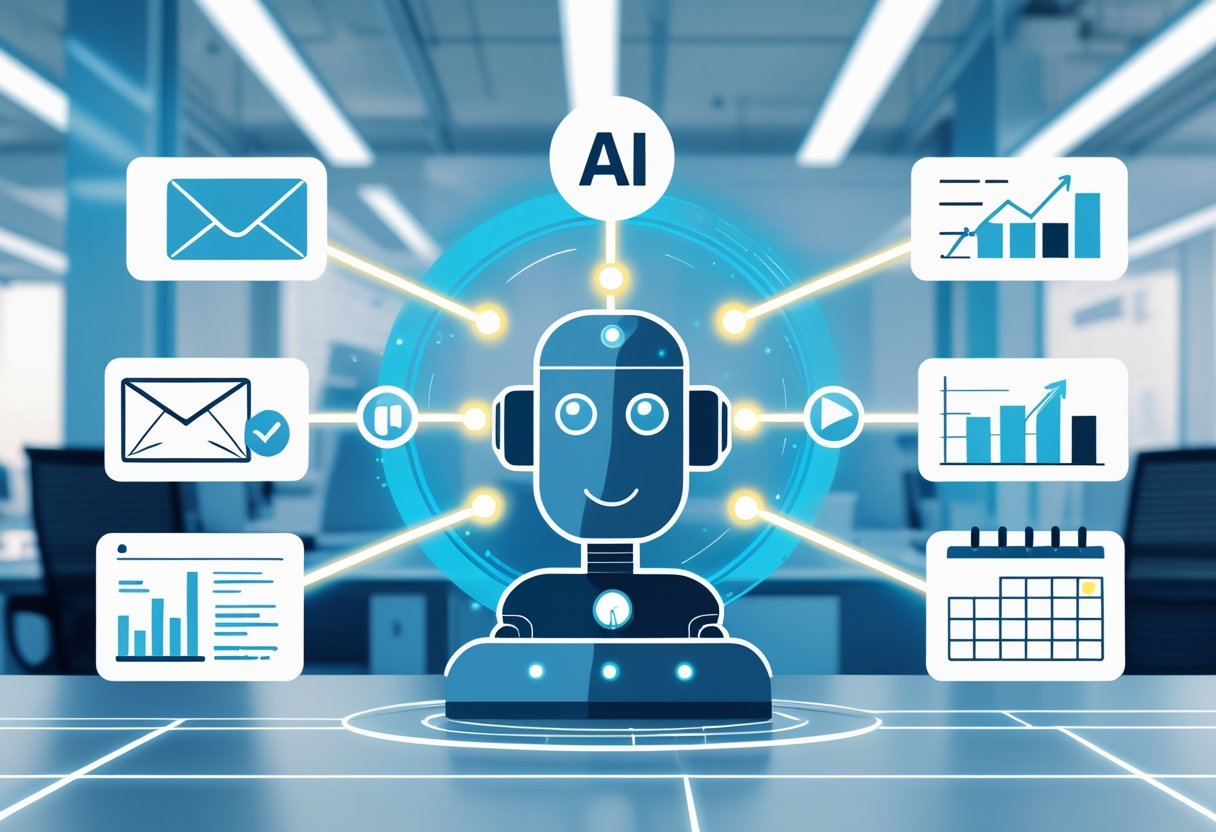
From personalising email campaigns to running real-time A/B tests, AI tools make it easier to reach the right audience at the right time. Platforms such as those highlighted in AI marketing automation guides show how automation can streamline workflows and reduce errors. This shift allows marketing teams to respond faster to trends and customer behaviour.
AI also helps with analysing data and predicting outcomes, making campaign decisions more accurate. With the right approach, automation can work in the background while delivering consistent, measurable improvements.
Key Takeaways
- AI can handle repetitive marketing tasks to free up time
- Automation improves targeting and campaign efficiency
- Data insights from AI help make better marketing decisions
Key Benefits / Why It Matters
AI can help teams make data-driven decisions by analysing large volumes of campaign data quickly. With the support of machine learning algorithms, marketers can identify trends and adjust strategies before wasting budget. This leads to more precise targeting and improved ROI.
Improving the customer experience is another core benefit. AI tools can personalise messages and offers using natural language processing (NLP) to understand user intent. This allows brands to respond in ways that feel timely and relevant, which can increase customer engagement.
Better engagement often supports stronger customer loyalty. When audiences receive consistent, useful communication, they are more likely to return. AI algorithms can track behaviour patterns and help deliver content that matches customer needs at each stage of their journey.
| Benefit | How AI Supports It |
|---|---|
| Data Accuracy | Processes and interprets large datasets without manual errors |
| Personalisation | Uses NLP and machine learning to tailor messages |
| Efficiency | Automates repetitive tasks, freeing time for strategy |
| ROI Growth | Optimises campaigns based on performance data |
AI also enhances user experience by streamlining interactions. For example, chatbots powered by NLP can answer questions instantly, reducing wait times and improving satisfaction.
By combining machine learning with real-time analytics, marketers can adapt campaigns to changing conditions. This flexibility helps maintain relevance across different channels and audience segments, as seen in AI-driven marketing strategies that focus on personalisation and efficiency.
Step-By-Step or Tips
Start by identifying goals for the marketing campaign. This could include improving conversion rates, boosting SEO performance, or increasing engagement in email marketing. Clear objectives make it easier to choose the right AI tools.
Next, gather and integrate data from all relevant channels. AI works best with a complete picture, including website analytics, ad performance, and customer purchase history. This data supports predictive analytics to forecast behaviour and plan targeted actions.
Use AI to segment audiences based on behaviour and preferences. This allows for hyper-personalisation, such as delivering personalised product recommendations in newsletters or tailoring content in ad campaigns.
Set up automation workflows. For example, AI can send follow-up email marketing messages when a user abandons a cart, or adjust bids in real-time for better campaign optimisation. Tools like those described in this step-by-step AI marketing guide can streamline these processes.
Monitor performance regularly. AI can track search engine optimisation metrics, click-through rates, and conversion rates in real time. This allows teams to adjust ad campaigns quickly for better results.
| Step | AI Application | Benefit |
|---|---|---|
| 1 | Predictive analytics | Anticipates customer actions |
| 2 | Hyper-personalisation | Increases relevance of messaging |
| 3 | Campaign optimisation | Improves ROI through adjustments |
| 4 | SEO tracking | Enhances search visibility |
| 5 | Email automation | Saves time and improves engagement |
Finally, refine strategies using AI insights. Over time, the system learns from results, enabling more accurate targeting and better performance across all channels.
Tools / Resources
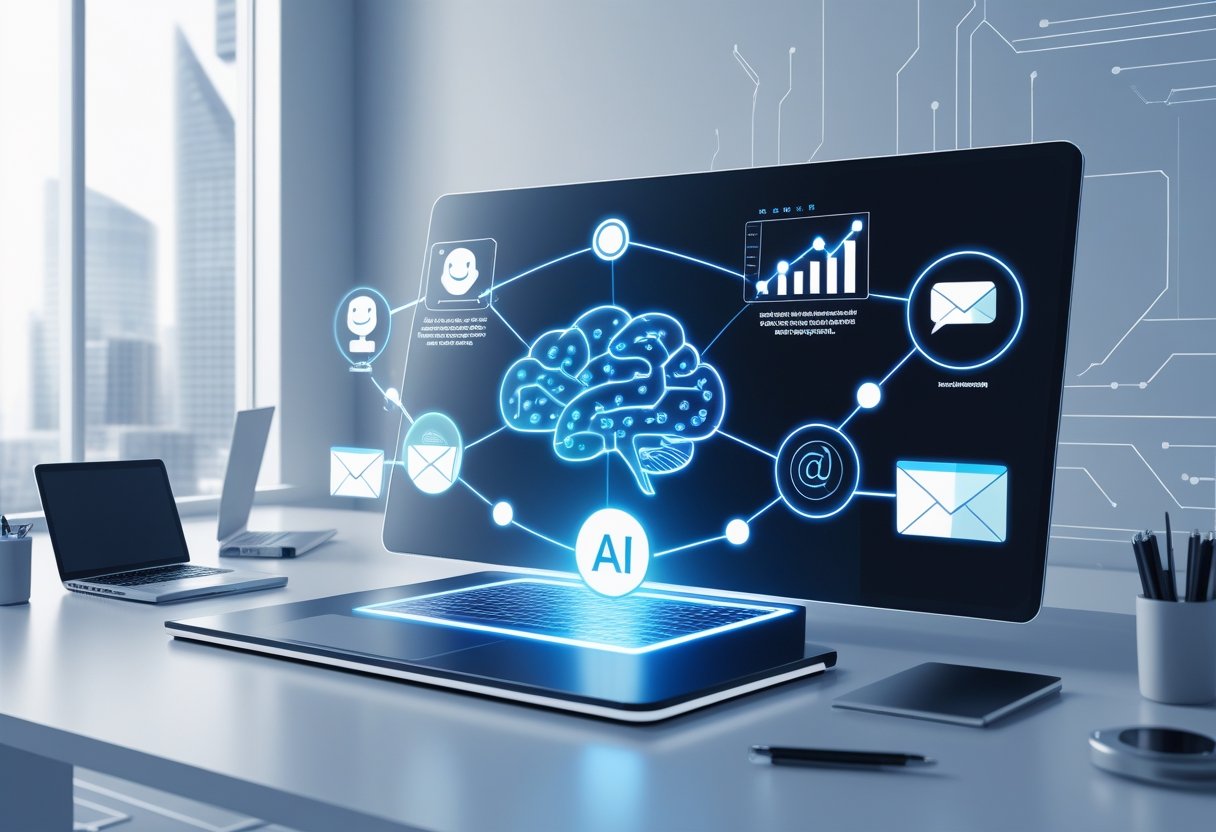
Marketers can use a range of AI tools to automate tasks and improve campaign performance. These tools help with personalisation, content creation, and social media management.
Jasper is popular for AI-powered content creation. It uses generative AI to produce blog posts, ad copy, and social media captions, reducing the time needed for manual writing.
Platforms like Mailchimp offer automation for email campaigns. They can send dynamic content tailored to user behaviour, improving engagement rates.
AI-powered chatbots and virtual assistants can respond to customer queries instantly. This improves service quality and frees teams from repetitive questions.
Google Ads and Facebook Ads now include AI-driven targeting. These systems adjust bids and targeting in real time to improve ad performance.
HubSpot combines CRM features with AI to help manage leads, automate follow-ups, and track campaign results.
Google Analytics uses AI to detect trends and predict outcomes. This helps marketers adjust strategies based on accurate data.
Below is a quick reference table of common tools and their primary uses:
| Tool / Platform | Main Use | AI Features |
|---|---|---|
| Jasper | Content creation | Generative AI for copywriting |
| Mailchimp | Email marketing | Personalisation & dynamic content |
| HubSpot | CRM & marketing automation | Lead scoring & follow-up automation |
| Google Ads | Paid advertising | Smart bidding & targeting |
| Facebook Ads | Social media advertising | Audience targeting optimisation |
| Google Analytics | Data tracking & insights | Predictive analytics |
For more details on automation platforms, see these AI marketing automation tools that streamline campaigns.
Common Mistakes To Avoid
Many marketers adopt AI tools without a clear plan for budget allocation. This can lead to overspending on software that delivers little return. Setting defined goals and tracking costs helps ensure AI investments remain cost-effective.
Some teams use AI without enough quality data. Poor or incomplete data can result in weak targeting and irrelevant content. Marketers should focus on collecting accurate, relevant information before launching automated campaigns.
It is common to overlook how AI fits into product development. When marketing and product teams fail to share insights, campaigns may promote features that are not aligned with customer needs. Regular communication between departments can prevent this.
Common AI marketing mistakes include:
- Relying only on automation without human review.
- Ignoring compliance and privacy regulations.
- Failing to test and adjust campaigns over time.
Another frequent error is choosing AI tools that do not integrate with existing systems. This can create extra manual work and slow down campaigns. Selecting platforms that work well with current processes saves time and reduces errors.
Marketers sometimes expect AI to replace all decision-making. While AI can speed up tasks, human oversight is still needed for strategy and creative direction. As noted in ClearVoice’s guide on AI mistakes, combining automation with human judgement often produces the best results.
Final Tips / Call To Action
Teams can get more value from AI by starting with clear marketing strategy goals. They should decide which tasks to automate first, such as email scheduling or audience segmentation. This helps them avoid wasting time on tools that do not fit their needs.
It is useful to test automation in small steps before scaling. For example, they might begin with AI-driven predictive analytics to improve targeting, then expand to content personalisation once results are consistent.
Practical steps to take next:
- Review current marketing workflows.
- Identify repetitive or time-consuming tasks.
- Match each task with a suitable AI tool.
- Measure results and adjust the process.
They can also improve campaigns by combining automation with human oversight. AI can manage data analysis and reporting, while marketers focus on creative and strategic decisions. This balance keeps campaigns accurate and relevant.
Here is a quick reference table for possible AI uses in marketing strategies:
| Task | AI Application Example |
|---|---|
| Audience segmentation | Machine learning to group customers by behaviour and demographics |
| Content personalisation | Automated recommendations based on user activity |
| Campaign performance tracking | Real-time analytics dashboards |
| Customer support | Chatbots for common questions and quick responses |
By using AI to handle repetitive work, teams can spend more time improving marketing strategies and building stronger customer connections. The key is to focus on measurable results and adapt tools as the business grows.
Frequently Asked Questions
AI in marketing automation can streamline repetitive work, improve targeting accuracy, and personalise customer interactions at scale. It can also help teams make faster, data-driven decisions that optimise campaign performance and resource allocation.
What are the best AI tools currently available for automating marketing tasks?
Popular options include platforms like HubSpot, Salesforce Marketing Cloud, and Mailchimp with AI-powered features. Tools such as Funnel.io can manage campaign data and reporting, while Jasper and Copy.ai assist with content creation. Selection often depends on the specific goals, budget, and integrations required.
How can AI be integrated into existing marketing strategies to enhance performance?
AI can analyse customer data to refine audience segmentation and improve ad targeting. It can also automate email marketing, social media scheduling, and A/B testing. According to SocialBee, AI tools can take over repetitive tasks, freeing marketers to focus on strategy and creative work.
What are some successful case studies of AI-driven marketing automation?
Retail brands have used AI to deliver personalised product recommendations that increase conversion rates. In another example, travel companies have applied predictive analytics to send timely offers, improving booking rates. Platforms like Instapage highlight cases where AI-driven landing page optimisation boosted lead generation.
Which free AI marketing tools offer effective solutions for small businesses?
Small businesses can use free tiers of tools like Mailchimp, Canva’s AI design features, and ChatGPT’s basic plan for copywriting. Some platforms, such as Analytify, offer free analytics tools that help track performance without large investments. These options allow testing before committing to paid plans.
What skills are necessary to manage marketing campaigns powered by AI technology?
Marketers benefit from skills in data analysis, content strategy, and basic automation setup. Understanding how to evaluate AI-generated insights is essential. Knowledge of CRM systems and familiarity with AI marketing platforms help ensure smooth integration and effective results.
How does leveraging AI in marketing automation improve customer engagement?
AI enables personalised messaging based on real-time behaviour and preferences. It can suggest relevant products, send reminders at optimal times, and adapt content to user interests. As noted in the Workforce Institute, this targeted approach often leads to higher engagement rates and stronger customer relationships.