
Local businesses face constant pressure to save time, cut costs, and serve customers better. AI automation offers practical ways to achieve these goals by handling repetitive tasks, improving accuracy, and enabling faster decision-making. Monetising AI automation services means turning these capabilities into steady revenue while delivering measurable value to clients.
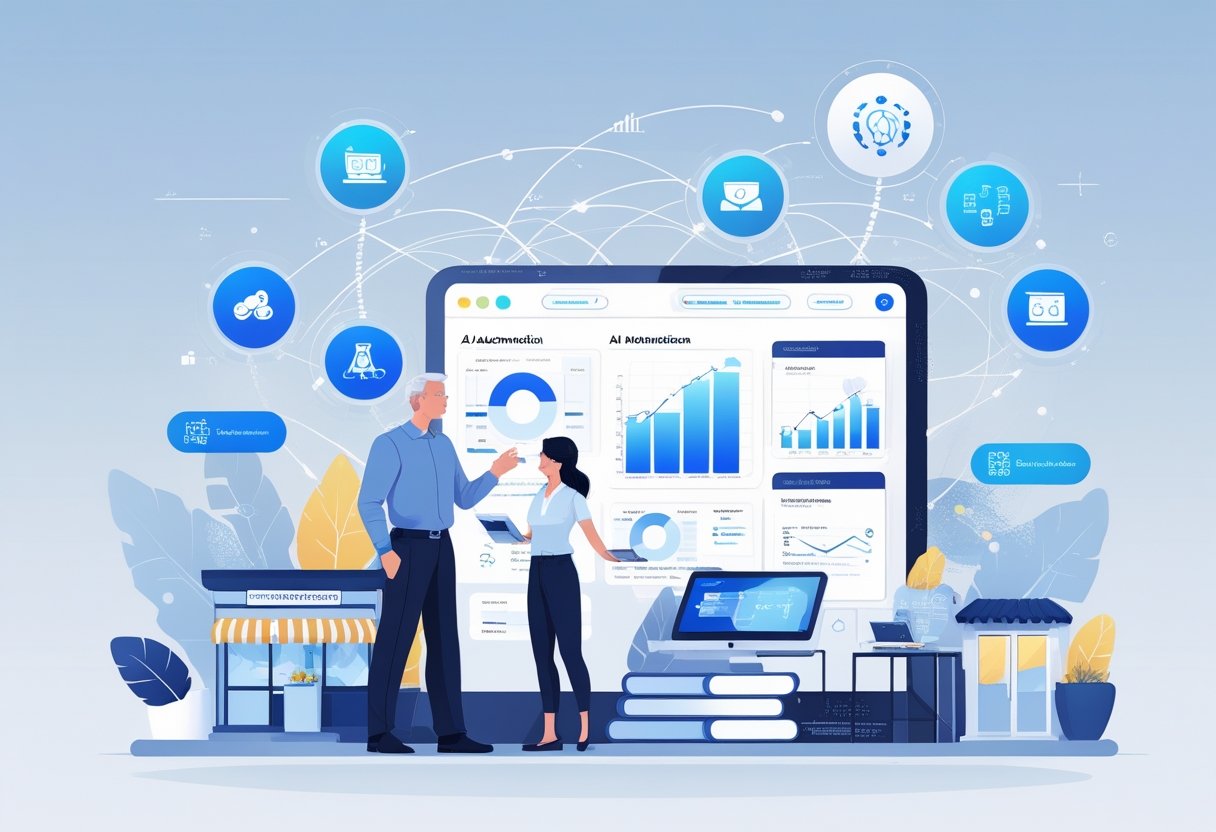
By offering solutions such as automated booking systems, AI-powered chatbots, or data-driven insights, a business can create services that customers are willing to pay for. Some companies use hybrid monetisation models that combine subscriptions, usage-based fees, and premium upgrades to match different customer needs. This approach helps local service providers compete with larger players without overextending resources.
AI automation can also enhance existing services rather than replace them. For example, AI tools for local businesses can personalise customer experiences, streamline workflows, and free up staff for higher-value work. The result is a stronger business model that benefits both the provider and the client.
Key Takeaways
- AI automation can generate consistent income for local businesses
- Flexible pricing models help match services to customer needs
- Enhancing current services with AI increases value and efficiency
Key Benefits / Why It Matters
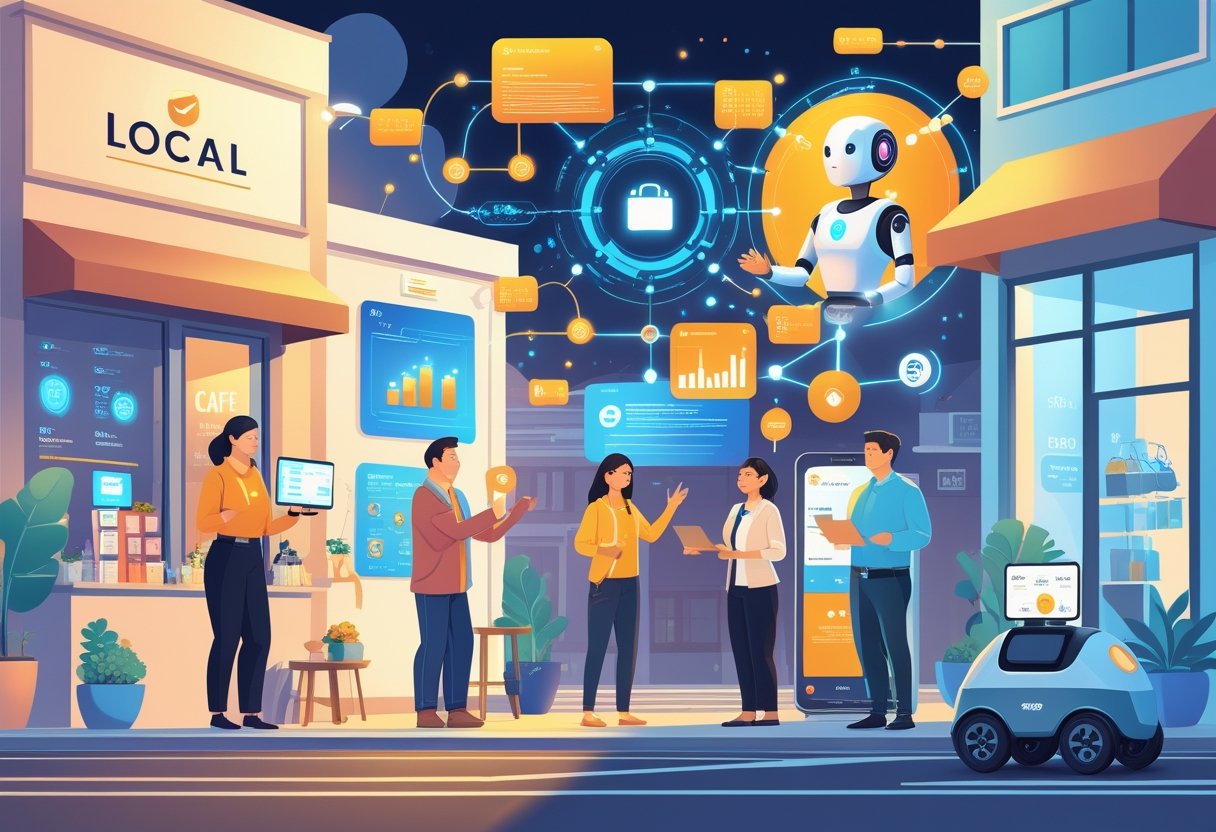
Local businesses can use AI automation to improve efficiency and reduce repetitive manual work. This makes it easier for them to focus on higher-value tasks such as customer service or product development.
Faster AI adoption allows small companies to stay competitive without needing large technical teams. Tools and platforms now offer ready-to-use AI capabilities that can be integrated into existing systems with minimal disruption.
AI-driven processes often improve customer satisfaction by enabling quicker responses, accurate information, and personalised experiences. For example, automated booking systems or chat assistants can serve customers at any time of day.
Better customer engagement comes from data-driven insights. AI can help identify buying patterns, preferred communication channels, and service needs, enabling businesses to tailor their offers and messages.
| Benefit | Impact on Local Businesses |
|---|---|
| Scalability | Handle more customers without hiring extra staff |
| Cost Efficiency | Reduce labour costs for routine tasks |
| Consistency | Maintain quality and accuracy in daily operations |
AI automation also supports scalability by allowing businesses to expand services without proportional increases in cost or workload. A bakery, for example, could manage more orders through an AI-powered online system without adding new staff.
By combining automation with human oversight, businesses can ensure reliable performance while retaining a personal touch. This balanced approach helps them gain the benefits of AI without losing the qualities that make them unique.
Step-By-Step or Tips
1. Identify business needs
They should start by mapping out where automation can save time or reduce costs. For example, missed calls can lead to lost revenue, and an AI-powered call handling system can help address this issue.
2. Choose the right AI tools
Selecting between predictive analytics, generative AI, or natural language processing (NLP) depends on the task. Predictive analytics can forecast demand, while generative AI can create marketing content.
3. Integrate with existing systems
AI services work best when linked to a company’s current software. For instance, machine learning tools can connect to CRM platforms to improve lead scoring.
4. Start small and scale
It is often better to deploy one automation service first. This allows the business to measure results before expanding into other areas such as chatbot support using NLP.
5. Monitor and adjust
Regular performance checks ensure that the AI continues to meet goals. Data from predictive analytics can guide when to update models or retrain systems.
| Step | AI Technology Example | Business Benefit |
|---|---|---|
| Identify needs | Predictive analytics | Better demand forecasting |
| Choose tools | Generative AI | Automated marketing content |
| Integrate systems | Machine learning | Improved lead scoring |
| Start small | NLP chatbot | 24/7 customer support |
| Monitor results | Predictive analytics | Ongoing optimisation |
6. Offer as a service
Providers can package these solutions for local businesses, as shown in guides like how to sell AI to local businesses. This approach makes advanced automation accessible without high upfront costs.
Tools / Resources
Local businesses can choose from a range of AI automation tools to improve efficiency and customer service. Common options include chatbots, smart scheduling systems, and workflow automation platforms. Selecting the right tools depends on the service offered, budget, and technical capacity.
When planning for monetisation, businesses should consider tiered pricing or subscription-based models. These approaches make services accessible to smaller clients while still offering premium features for higher-paying customers. Details on implementing these models can be found in guides on AI monetisation strategies.
A solid AI infrastructure is essential for reliable performance. This can involve cloud hosting, integration with existing software, and ongoing system monitoring. Some businesses may invest in in-house expertise, while others partner with external AI providers, as noted in best practice recommendations.
Example AI tools for local businesses:
| Tool Type | Example Use Case | Monetisation Fit |
|---|---|---|
| Chatbots | Answering customer questions | Subscription-based models |
| Smart Scheduling | Booking appointments automatically | Tiered pricing for added features |
| Workflow Automation | Reducing manual admin tasks | Subscription or one-off licensing |
Businesses should also plan for AI investment costs, including software licences, staff training, and system upgrades. Choosing scalable tools helps reduce future expenses as the business grows.
Free or low-cost trial versions can help test functionality before committing to a full rollout. This allows decision-makers to measure impact and adjust pricing strategies accordingly.
Common Mistakes To Avoid
Many local businesses rush into AI monetisation without a clear plan. They may adopt tools without knowing how these fit into their wider monetisation strategies. This often leads to wasted time and poor returns.
One frequent mistake is chasing new AI tools instead of building reliable systems. As noted in advice for founders on AI monetisation pitfalls, constant switching between platforms can slow progress and increase costs.
Another issue is setting AI pricing strategies without understanding the target market. Businesses sometimes overprice services, assuming AI innovation alone justifies higher rates. Others underprice, making it hard to sustain operations.
A lack of market research is also common. Without knowing customer needs, companies risk offering irrelevant services. This is a key reason some RPA providers struggle to grow in competitive markets.
Poor execution can also derail AI projects. In some cases, teams misalign expectations or fail to train staff, leading to underused or ineffective solutions.
Key mistakes to watch for:
| Mistake | Impact |
|---|---|
| No clear monetisation plan | Unstable revenue |
| Chasing tools over systems | Increased costs |
| Weak pricing strategy | Lost sales or low margins |
| Skipping market research | Poor service fit |
| Poor execution | Low adoption |
Avoiding these errors helps local businesses build sustainable AI-driven revenue streams.
Final Tips / Call To Action

Small business owners can start by identifying where automation can save time or improve service quality. Even small changes, like automating appointment booking or customer follow-ups, can reduce costs and free staff for higher-value work.
They should focus on services that provide clear returns. For example:
| Automation Service | Potential Benefit |
|---|---|
| Chatbots | Faster customer response times |
| Automated invoicing | Reduced admin workload |
| AI analytics | Better sales insights |
Testing services on a small scale before a wider rollout helps reduce risk. This allows them to measure results and adjust quickly.
Creating new revenue streams through AI is possible when automation is built into paid services. For example, a marketing agency could offer AI-driven ad targeting as an add-on package.
To move forward, they can:
- Identify one process to automate in the next month.
- Set a measurable goal, such as reducing response time by 30%.
- Review available tools or partner with a provider offering AI automation.
Businesses can also explore guidance from proven strategies for monetising AI successfully to ensure they choose scalable and compliant solutions.
Acting early allows them to build experience and credibility in AI services before competitors catch up.
Frequently Asked Questions
AI automation can help local businesses reduce manual work, improve customer interactions, and make better use of data. It can also support growth by streamlining operations and enabling more consistent service delivery.
What are the initial steps to adopt AI automation for enhancing local business revenue?
Businesses often begin by identifying repetitive tasks that can be handled by automation tools. Examples include appointment scheduling, social media scheduling, and marketing automation.
They then select suitable AI tools that integrate with their existing systems and train staff to use them effectively. Starting small helps test performance before scaling.
How can AI-driven solutions be tailored to suit the specific needs of small and medium enterprises?
Customisation is key. AI systems can be adjusted to match industry-specific workflows, such as lead generation for service providers or predictive maintenance for repair businesses.
Local businesses can also adapt virtual assistants to handle common customer queries, ensuring the tone and responses reflect their brand.
What are the potential cost savings associated with implementing AI automation in local businesses?
AI can reduce labour costs by automating routine processes like customer service automation and data entry. This frees staff to focus on higher-value work.
It can also cut operational expenses by improving operational efficiency and reducing errors that lead to wasted time or resources.
Can you explain the scalability of AI services for growing local business operations?
AI services often scale without major infrastructure changes. A business can expand automation tools to handle more tasks or larger volumes as demand grows.
For example, marketing automation systems can manage more campaigns, and virtual assistants can be trained to answer a broader range of customer questions.
What are the common challenges local businesses face when integrating AI automation, and how can they be overcome?
Challenges include high initial setup costs, limited technical knowledge, and resistance from staff. Selecting user-friendly AI tools and providing clear training can help address these issues.
Working with experienced providers or following best practices for monetising AI successfully can also reduce risks during implementation.
How does AI automation contribute to improving customer experiences in local businesses?
AI can enhance the customer experience by offering faster responses through virtual assistants and customer service automation.
It can also use sentiment analysis to understand feedback and adjust services accordingly, leading to more personalised and relevant interactions.