
Launching an AI consulting service can open the door to a growing market where businesses seek guidance on adopting artificial intelligence. To start, it is essential to define a clear niche, establish a solid business plan, and understand the specific problems AI can solve for clients. This approach ensures the service is targeted, relevant, and competitive from the outset.

By offering tailored solutions, an AI consultant can help organisations save time, cut costs, and improve decision-making. Those who combine technical expertise with strong communication skills are well-placed to build trust and long-term partnerships. Resources such as this step-by-step guide to starting an AI consulting business can provide practical direction for getting started.
A well-structured launch strategy reduces risks and increases the chances of securing early clients. From selecting the right tools to avoiding common pitfalls, careful preparation is the foundation for sustainable growth in this competitive field.
Key Takeaways
- Clear planning and a defined niche build a strong foundation
- Tailored solutions create value and trust with clients
- The right tools and preparation reduce risks and support growth
Key Benefits / Why It Matters

An AI consulting service helps organisations use data and automation to improve decision-making. It can guide them in applying AI tools that match their goals and resources.
Operational efficiency often improves when AI automates repetitive tasks. This frees teams to focus on higher-value work and reduces the risk of human error.
AI solutions can boost productivity by speeding up processes such as data analysis, report generation, and customer support. These gains can help businesses deliver results faster without increasing staff workload.
| Benefit | How It Helps |
|---|---|
| Cost savings | Reduces manual labour and optimises resource use |
| Better decision-making | Provides insights from large datasets quickly |
| Consistency | Delivers the same quality and accuracy across repeated tasks |
| Scalability | Supports business growth without a proportional rise in operating costs |
AI consulting also helps organisations choose the right technology. This reduces wasted investment in tools that do not fit their needs.
It can also improve data use. By structuring and analysing information effectively, companies gain clearer insights into customer behaviour, market trends, and operational performance.
An experienced consultant brings knowledge of best practices, regulatory requirements, and integration challenges. This can make adoption smoother and reduce project risks.
For many businesses, AI consulting is not just about technology. It is about aligning AI strategies with clear business objectives for measurable results.
Step-By-Step Guide To Launching An AI Consulting Service
Starting an AI consulting firm requires clear planning and a structured approach. The process can be broken down into practical steps that help ensure a smooth launch.
1. Define the AI business model
They should decide if the focus will be on strategy, implementation, or both. This includes identifying target industries and the type of services offered, such as AI strategy development, data analysis, or automation solutions.
2. Conduct market research
Research helps them understand demand, competition, and pricing expectations. Reviewing industry trends and case studies, such as those in AI Consulting Unleashed, can provide useful insights.
3. Build the service offering
AI consultants may work alongside data scientists to deliver technical solutions. Clear service packages make it easier for clients to understand value and costs.
4. Prepare financial projections
Accurate revenue forecasts, cost estimates, and profit margins guide decision-making. These projections are essential for funding applications and growth planning.
5. Register the consulting business
They should choose a legal structure, register with relevant authorities, and open a business bank account to keep finances organised.
6. Develop marketing and sales strategies
This includes creating a website, publishing case studies, and networking. Guides like Starting an AI Consulting Firm: Step-by-Step Instructions can help with outreach ideas.
7. Deliver and refine services
After securing initial clients, they should gather feedback and adjust offerings. This ensures the AI consulting service remains competitive and relevant.
Tools / Resources
Selecting the right tools helps an AI consulting service run smoothly and deliver consistent results. The choice should cover both technical AI needs and day‑to‑day business operations.
AI tools and AI software form the core of the service. These may include machine learning platforms, data analysis software, and automation frameworks. Many firms use platforms like TensorFlow, PyTorch, or cloud‑based AI services to build and deploy solutions.
For managing projects, they may use project management tools such as Trello or Notion. Trello offers a simple board‑based system for tracking tasks, while Notion combines notes, databases, and task lists in one workspace.
Financial tracking is also important. QuickBooks can help manage invoices, expenses, and tax records. This ensures accurate reporting and saves time during financial reviews.
A simple table can help compare some common tools:
| Purpose | Example Tool | Key Benefit |
|---|---|---|
| AI development | TensorFlow | Open‑source and widely supported |
| Task management | Trello | Visual boards for clear tracking |
| Knowledge management | Notion | Flexible workspace for teams |
| Accounting | QuickBooks | Easy invoicing and expense tracking |
In addition to these, cloud storage and collaboration platforms such as Google Drive or Microsoft OneDrive can support secure file sharing. Reliable communication tools like Slack or Microsoft Teams help keep teams and clients connected.
Using a balanced mix of technical and business tools allows an AI consulting service to operate efficiently and meet client needs without unnecessary complexity.
Common Mistakes To Avoid
Many new AI consulting services fail to set clear goals before starting. Without a defined scope, projects can drift, waste resources, and miss deadlines. A simple written plan helps maintain focus.
Ignoring data protection regulations is a major risk. Consultants must follow laws such as GDPR when collecting, storing, or processing client data. Failure to comply can result in fines and loss of trust.
Overcomplicating services early on can confuse clients. Starting with a small, well-defined offer allows the business to test demand and refine processes, as suggested in the consulting business checklist.
Some founders skip proper market research. Without understanding the target audience, pricing and positioning may not align with client needs. This can lead to slow sales and poor retention.
Common pitfalls include:
| Mistake | Why It’s a Problem |
|---|---|
| Weak contracts | Leads to disputes over scope and payment |
| No clear pricing model | Causes confusion and delays in closing deals |
| Ignoring competition | Misses opportunities to differentiate |
Neglecting cybersecurity is another concern. AI projects often handle sensitive information, so consultants must use secure systems and follow best practices for data protection.
Finally, waiting too long to launch can slow progress. Testing services with a small client group provides feedback and revenue sooner, which supports growth and improvement.
Final Tips / Call To Action
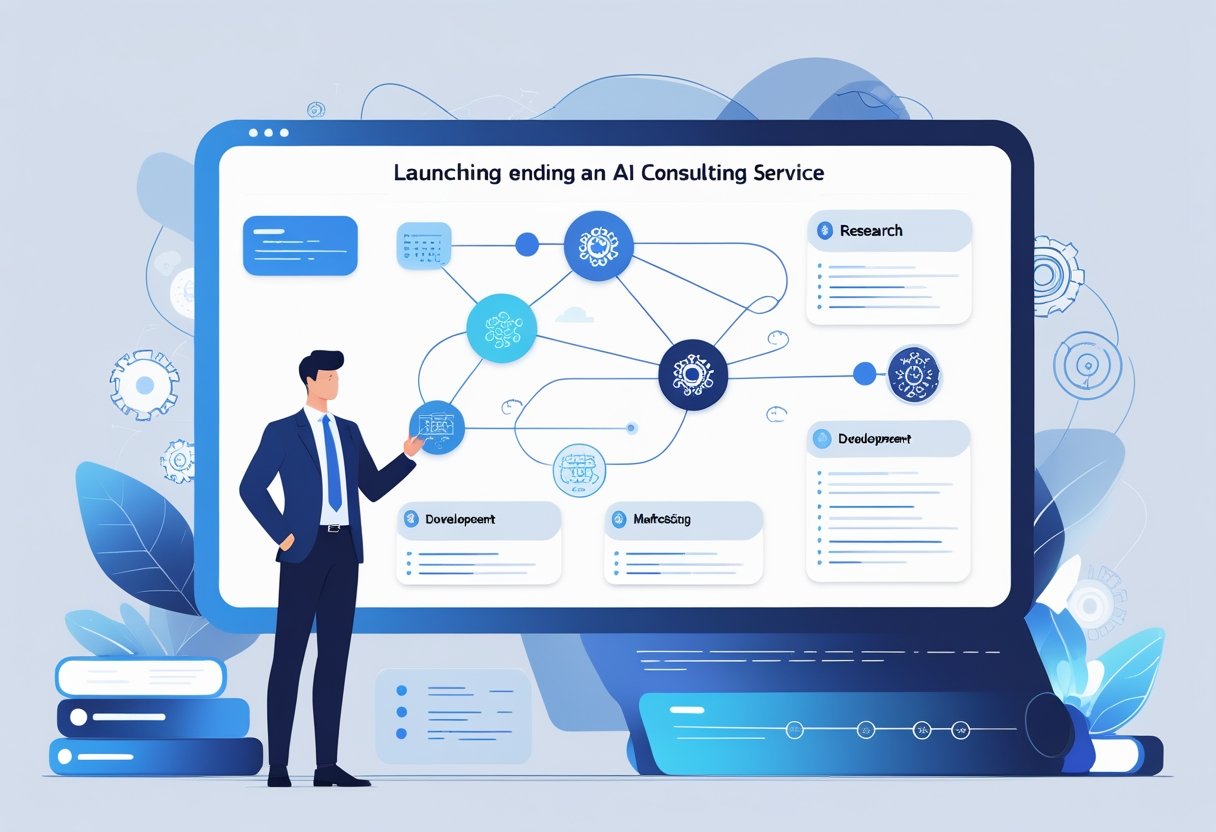
Before launch, they should review every part of their offer. This includes pricing, service descriptions, and client onboarding steps. A clear plan avoids confusion once clients start making enquiries.
Strong client outreach is essential. They can use email campaigns, LinkedIn networking, and industry events to connect with potential clients. Each outreach should explain the value of their AI consulting service in simple, direct terms.
A well-crafted call to action (CTA) helps guide prospects to the next step. A CTA can ask them to book a consultation, download a service guide, or request a proposal. For guidance on crafting effective CTAs, they can review tips on creating an effective call-to-action.
Checklist before launch:
| Task | Status |
|---|---|
| Review service packages | ☐ |
| Test booking or contact forms | ☐ |
| Prepare client proposal template | ☐ |
| Set up email and follow-up process | ☐ |
| Schedule first outreach campaign | ☐ |
They should also set a clear campaign start and end date if running a timed promotion. This helps track results and refine future efforts, as suggested in Kickstarter launch planning.
Finally, they should monitor responses closely in the first weeks. Quick replies to questions or leads can increase trust and help secure early projects.
Frequently Asked Questions
Launching an AI consulting service requires clear planning, defined expertise, and a structured approach to operations. Success depends on selecting a profitable niche, building a skilled team, complying with regulations, and maintaining competitive pricing while keeping up with industry changes.
What are the initial steps to establish an AI consulting firm?
They should begin by defining a specific niche within the AI field, such as natural language processing or predictive analytics. Conducting market research helps identify demand and competition. Creating a detailed business plan will guide service offerings, marketing, and financial projections.
How can one identify and attract the right clientele for AI consultancy services?
They can target industries where AI adoption is growing, such as healthcare, finance, or manufacturing. Networking at industry events, publishing case studies, and offering free initial consultations can help attract clients. Using a clear value proposition makes it easier to win projects.
What qualifications and skills are essential for building a successful AI consulting team?
A strong team often includes AI engineers, data scientists, and project managers with proven experience. Skills in programming languages like Python, knowledge of machine learning frameworks, and data analysis are valuable. Communication and problem-solving abilities are also essential for client-facing work.
What are the legal considerations to bear in mind when setting up an AI consulting business?
They must register the business and comply with relevant data protection laws, such as GDPR. Contracts should clearly define deliverables, timelines, and intellectual property rights. Depending on the location, specific licences or certifications may be required for certain industries.
How should one price AI consulting services to remain competitive yet profitable?
Pricing can be based on hourly rates, project-based fees, or retainer agreements. They should research competitors’ rates and factor in labour, tools, and operational costs. Offering tiered pricing packages can appeal to a broader range of clients while maintaining profitability.
What strategies can be employed to stay abreast of the latest AI trends and advancements?
They can follow reputable AI journals, attend conferences, and join professional networks. Participating in online courses and workshops helps maintain technical skills. Collaborating with research institutions can also provide early access to emerging technologies and methods.